Overview: This article delves into the concept of microgrids and their role in resistor -and-its-function>jakelectronics .com/blog/integration-of-renewable-energy-sources-in-modern-power-systems> modern power systems . It explores the operating difficulties faced by microgrids and effective management in areas such as design, planning, operation, and cybersecurity.
A microgrid is an isolated system that uses local distribution generation and energy storage systems to supply customer demands. Distribution systems with microgrid capabilities will have several advantages, such as increased productivity, dependability, accessibility, and power quality.
This grid modernization faces numerous challenges to operate reliably and efficiently. The problems can be divided into three groups: challenges with operating microgrids, challenges with the proliferation of renewable energy sources, and challenges with power electronics. In Figure 1, various aspects and issues brought up by these technologies are summarized, and challenges in managing microgrids are discussed in detail in this article.
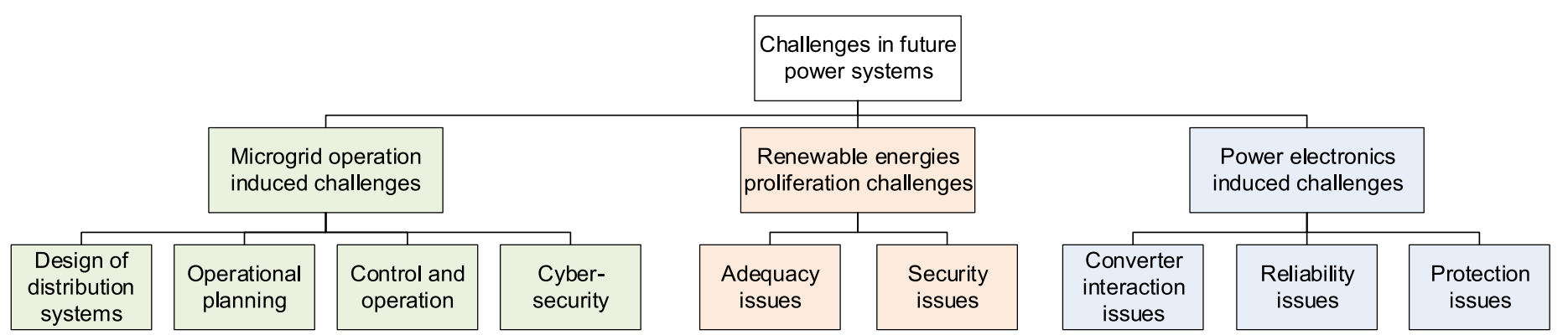
Fig. 1. Challenges in future electronic-based power systems Source: IEEE Open Journal of Power Electronics
Challenges in Managing Microgrids
Modern power system design, planning, and operation face a variety of difficulties as a result of the microgrid mode of operation. A microgrid must be powerful enough to meet demand in island mode, unlike conventional power systems. Utilizing information and communication technologies (ICTs) can help microgrids operate effectively and economically. Power systems will be vulnerable to cyber issues if ICTs are integrated into microgrid operations.
Design, operational planning, control and operation, and cybersecurity are the broad categories into which the challenges caused by microgrid operation can be divided.
Smart Grid Design Challenges
Distribution systems are increasingly installing Distributed Generations (DGs). Decarbonization states that the majority of DGs are renewable-based resources with irregular output power, like solar and wind power systems. Energy storage is necessary when using these methods in the island state in order to maintain the grid voltage and balance production and demand. Therefore, the primary elements of the upcoming microgrids are DGs and Distributed Energy Storage Systems (DESS). The location and dimensions of DESS will be crucial.
A sufficient amount of energy sources must be available to each distribution system segment, including single-customer, partial feeder, full feeder, and substation microgrids, in order to supply each segment's critical load in the event of islanding. Because of this, modern power systems must regionally assure the sufficiency of energy, unlike conventional power systems. To accomplish this, the size and placement of DESS in the various distribution network segments must be carefully chosen and planned.
Additionally, the protection and monitoring system should segment the distribution system in a suitable manner. A coordinated protection system over the substation can help safely separate the defective areas and make it easier to operate the island microgrids to meet demand. The size of the energy storage system on each segment of an island must also be considered in order to supply the loads adequately. Therefore, proper design of the protection system locations, placement, and size of DESS is necessary for future distribution systems to operate reliably and resiliently.
In medium-voltage distribution networks, medium-voltage DC (MVDC) transmission systems will also support the reliable and effective operation of distribution systems. Ancillary services that the MVDC lines can offer include voltage and frequency support, generation-load balancing, and decoupling the dynamics of the network. At the MV level, it may also enable a significant penetration of renewable resources.
Furthermore, by decoupling the networks and providing them with black start support through a quick frequency response and voltage support, MVDC systems can improve the distribution networks' durability. Therefore, it is important to take into account during the planning stage how the coupling points of MVDC lines between two MV distribution networks can impact the system's overall adequacy.
Smart Grid Operations Management
A variety of distribution generations and energy storage systems run by individual investors are going to be installed in distribution networks. Smart energy and power management strategies are necessary for the efficient and dependable operation of distributed resources. Interconnected microgrid promotion and management will face new difficulties requiring socioeconomic solutions for the best and most accurate decision-making.
Planning a cluster of microgrids can become even more difficult. Private owners may not agree to support the other microgrids due to the significance of their own loads, which can be the main problem. In this situation, the generation-demand balance might not be maintained, which would make the system unstable. Single-customer microgrids may prefer to cut off their connection to the local grid. New guidelines for the island mode of operation or an adequate
design can resolve this issue. Adequate facility planning and operational regulations would be the ideal solution.
Smart Grid Control and Operation
Complex communication networks and monitoring systems are needed for the centrally managed top-down operation of DGs and DESSs in distribution networks. Additionally, using point-to-point communication will increase the system's susceptibility to data loss and cyberattacks. Decentralized or distributed control strategies can therefore ensure the microgrids' consistent operation. These control techniques can be used at the protection level, the power and energy management level, and the active and reactive power sharing control levels.
There have been many distributed and decentralized power-sharing methods for microgrid control so far. Additionally, the fault location and protection system functionality, which interacts with decision centers, dynamically affect the microgrid structure. When a fault arises, an islanding detection algorithm must be used to isolate the problem area while continuing to deliver power to as much of the system as possible.
To ensure overall system sufficiency and security, the energy management systems of microgrids and protection systems must be properly coordinated. Self-organizing mechanisms can accomplish this by utilizing local knowledge and resources to achieve broad goals. Additionally, controlling the converters in island mode is challenging because of the dynamic structure of microgrids.
Smart Grid Cybersecurity
Power systems are becoming more and more distributed due to digitalization and liberalization. Only by utilizing ICTs among various domains, such as generation, transmission, distribution, consumption, operation, marketing, and service providers, will the optimal and reliable operation of such systems be possible. Uncertainty and threats in the system could cause any form of instability. As a result, ICTs are used in a variety of fields to exchange information and power systems.
Three primary networks can be implemented to achieve this goal: (1) the home area network (HAN), which connects end users to the smart grids; (2) the
neighboring area network (NAN), which connects the HAN with Wide Area Networks (WAN); and (3) the WAN, which is responsible for monitoring and controlling the generation and transmission of electricity. These three networks transmit the control signals from the decision-making center to the various control units, such as protection devices, generation units, and loads by smart meters and Remote Terminal Units (RTUs).
The performance of the power system is dependent on the physical and cyber layers' dependability. Additionally, cyberattacks with malicious intentions pose a threat to this layer and could influence choices made by the power system. By manipulating measurements or injecting false data through the communication links, hackers can cause this intrusion, which leads to decision errors.
Additionally, cybersecurity management may result in additional costs for power systems, and the origin of these costs should be taken into account during the planning stage.
Summarizing the Key Points
- Microgrids face challenges in operating reliably and efficiently in modern power systems.
- Challenges include managing microgrids, integrating renewable energy sources, and power electronics.
- Effective management is crucial in areas such as design, planning, operation, and cybersecurity.
- Cybersecurity is a significant concern in the implementation of microgrids.
- Power electronics play a vital role in the operation of microgrids.
- Microgrids offer advantages in distribution systems and can address challenges posed by renewable energy sources.
References
[1] Peyghami, Saeed, Peter Palensky, and Frede Blaabjerg. “An Overview on the Reliability of Modern Power Electronic Based Power Systems.” IEEE Open Journal of Power Electronics 1 (2020): 34–50. https://doi.org/10.1109/ojpel.2020.2973926