Overview: The article discusses the challenges associated with the adoption of renewable energy sources in microgrids, including reliability and security issues, and also elaborates on power electronics-related challenges.
Renewable energy sources are increasingly dominating power systems. They help decarbonize power systems while also making them more decentralized, self-sufficient, and bottom-up. When decentralized generators take over, the term "Smart Grid" or "Microgrid" is used.
These innovative technologies present both opportunities and difficulties because of their potential to enhance technical and financial efficiency, planning, operations, and environmental impact. One such aspect is reliability, which affects the dependability of systems and their constituent parts.
Stability is typically defined as the capability to recover from transient or sustained switching operation-induced changes in electrical characteristics while remaining within the safe operating range. Whereas reliability and robustness typically refer to the inability to repair damaged or broken devices.
Stress created is typically close to the safe operating range boundary in reliability tests and outside the safe operating range in robustness tests. On a much shorter time scale than reliability, robustness can get dangerously close to the destructive limits of system stimuli.
What are the criteria that really affect the dependability of renewable energy systems?
There are three categories of challenges: those resulting from power electronics, those relating to the adoption of renewable energy sources, and those resulting from microgrid operation. Part 1 goes into great detail about the difficulties brought on by microgrid operations. This article deals with challenges caused by the adoption of renewable energy sources and those related to power electronics.
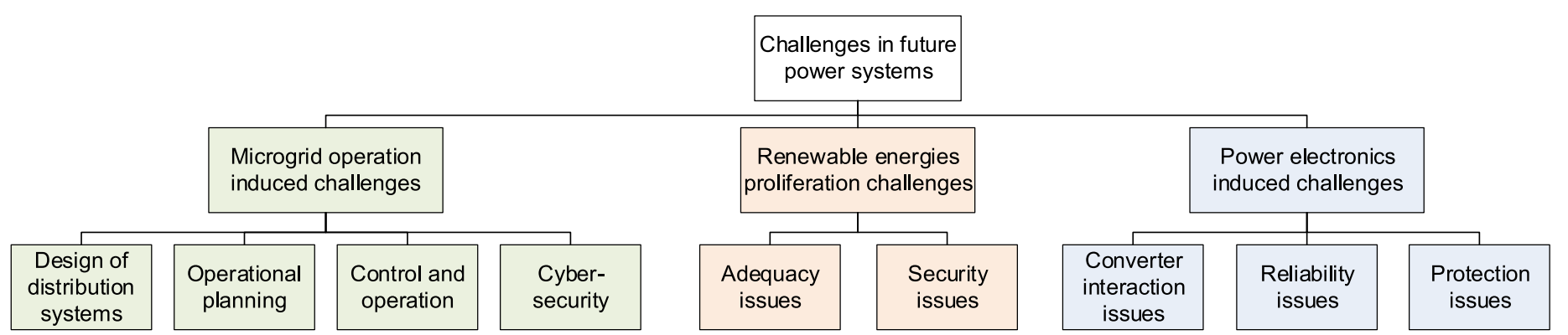
Fig. 1. Challenges in future electronic-based power systems. Source: IEEE Open Journal of Power Electronics
In recent years, renewable energies have played an increasingly important role in the production of electricity as a result of decarbonization. High-capacity solar and wind turbines have been installed around the world as interest in these renewable energy sources grows.
The transition to fully renewable energy-based grids faces technical challenges despite the fact that increasing renewable energy sources helps to decarbonize the environment and replace fossil fuels with cleaner energy sources.
These difficulties can be broken down into two categories: adequacy issues, which are brought up by generation uncertainty, and security issues, which are linked to the low inertia of renewable-based grids.
Adequacy Concerns
The uncertainty caused by intermittently generated power causes a generation-demand mismatch, which in turn causes adequacy problems. The overall system needs to be well designed to handle the generational demand imbalance.
Storage systems, hydropower plants, interconnecting neighboring networks, and de-loading renewable power plants are all viable options for ensuring system adequacy.
Role of the energy storage system
One promising solution to increasing the widespread use of renewable energies is the installation of utility-scale energy storage systems. The size, number, and placement of the energy storage systems are the primary technical and economic challenges that may be encountered with this solution.
In the event of a grid split, these features can contribute to the overall system's dependability and resilience. Therefore, it is crucial to properly execute the design of utility-scale energy storage systems.
Role of High-Voltage DC System
HVDC systems' ability to support the grid's frequency and voltage makes them ideal for interconnecting with neighboring networks, which in turn increases the penetration of renewable energy. Consequently, power grids with a high capacity of renewable energies place a premium on effective control of HVDC systems to maintain the grid's adequacy.
However, promoting grid reliability through neighboring networks could present difficulties in terms of marketing. The generation-demand mismatch can be mitigated with the help of an HVDC connection, which can also facilitate the incorporation of various renewable energies.
Due to inverse seasonal behavior, interconnecting South Europe with a high potential solar energy with North Europe with a high potential wind energy can help smooth the generation profile. Furthermore, this can impact the size of energy storage systems in cases where generation availability is enhanced.
Role of Re-Loaded Renewable Sources
Full renewable operation of grids can be facilitated by working under the highest acceptable power of renewable resources, even though this may not be a cost-effective solution. Consequently, there is a trade-off between energy loss and the system's reliability provided by de-loaded renewables. Possible new market difficulties may result from this.
Security Concerns
The kinetic energy stored in the rotating mass inertia of the turbine-generator, which is also called "inertial response," can help load-generation balance in power systems with synchronous machines.
Role of Control System
The droop controller, also known as the primary controller, of the generator governor will sense the frequency variation brought on by a significant load change or loss of generation. The frequency deviation will then be returned to its original value after secondary control has been implemented.
The primary control makes use of the primary reserve to achieve quick load-generation equilibrium. By utilizing the spinning reserve, the secondary control frees up the generation capacity contributing to the primary reserve. Tertiary-level scheduled units will provide long-term support for the load change.
With a rise in the use of renewable energy sources like wind and solar, the system's inertia will drop, weakening the inertial response support. A high rate of change of frequency (ROCOF) may result from this. Cascaded outages could result in full-power electronic systems. Renewable energy-based units should take part in frequency support to maintain the system's stability and reliability.
The control systems can use the inertial response to simulate the behavior of synchronous generators, the kinetic energy of wind turbine blades, energy storage, or de-loading the renewable units while they are running at their maximum power.
Role of Hydro-Power Plants
Additionally, using hydropower plants to smooth out the intermittent power from renewable sources like solar and wind energy may make it possible to use these sources of energy more frequently.
The grid experiences ultra-low-frequency associations as a result of the hydropower plants. This should be considered for reliable power transmission as it may cause frequency instability in the power system.
Challenges Caused by Power Electronics
Modern power systems increasingly employ power electronic converters for a variety of purposes. In fact, power electronics is evolving into a foundational technology for the implementation of microgrids and the advancement of highly widespread renewable energies. Power electronic converters have improved controllability, flexibility, and operability, but they also present some challenges in a variety of ways.
The power converters' interactions with other grid components, such as other converters, passive elements, and mechanical systems, are a significant problem that they bring up. Reliability issues with converter components also present difficulties. In addition, power converters in contemporary power systems face difficulties with protection issues.
Power Converter Interactions Concern
Different controllers are included with power electronic converters. These controllers have various bandwidths that range from a few Hertz to several kilohertz in design. The first difficulty is accessibility to the control system of each unit.
The overall system security assessment may be a challenging task given the high use of power converters because the interactions in the control system depend on the converter and its control models over a wide range of frequencies.
Converter Component Reliability Concern
The converters are a common point of failure in many industrial applications, including wind and PV systems. Depending on the operating and environmental conditions, the converters' dependability varies.
Capacitors and semiconductors, which are particularly vulnerable to failure, are subjected to unstable operating and environmental conditions like power loading, ambient temperature, humidity, vibration, and so on, which can lead to premature failure.
As a result, the converters' failure rate will depend on time, and their component end-of-life is limited. Additionally, the operating conditions affect the converter's end of life. In order to model the converter's reliability, its mission profile should be taken into account.
Protection System Concern
The protection systems in place are capable of detecting and fixing faults without interfering with system continuity. However, compared to electromechanical devices, the current limit of semiconductor-based devices is much lower. To detect and clear the fault and/or separate the faulty regions in a timely manner, advanced protection algorithms and devices should be created.
Summarizing the Key Points
- Renewable energy sources are increasingly dominating power systems, helping to decarbonize them while making them more decentralized, self-sufficient, and bottom-up.
- The transition to fully renewable energy-based grids faces technical challenges despite the fact that increasing renewable energy sources helps to decarbonize the environment and replace fossil fuels with cleaner energy sources.
- The challenges associated with the adoption of renewable energy sources in microgrids can be broken down into two categories: adequacy issues, which are brought up by generation uncertainty, and security issues, which are linked to the low inertia of renewable-based grids.
- In a number of ways, power electronic converters also pose some difficulties. A significant issue that the power converters raise is how they interact with other grid components, converter component reliability, and security issues.
Reference
Peyghami, Saeed, Peter Palensky, and Frede Blaabjerg. “An Overview on the Reliability of Modern Power Electronic Based Power Systems.” IEEE Open Journal of Power Electronics 1 (2020): 34–50. https://doi.org/10.1109/ojpel.2020.2973926.