When electronics are in the development phase, one significant task is to decide on functionality. Experts go through hundreds of evaluations to qualify the specific functions and meet the design intended for electronics. The technology requires embedded system design and high customization levels. Our quest is to find and compare between FPGA and microcontroller circuitry.
JAK Electronics offers many high-performing electrical components, ICs, and FPGA chips. Experience user-friendly online shopping by visiting JAK Electronics. For FPGA chips, please visit this page.
Now, let's delve deeper to learn more about FPGA and microcontrollers.
Differences Between FPGA and Microcontrollers
FPGA and microcontrollers are powerful technical advancements that have surfaced to perform specified tasks. Both are unique in performing abilities and can be used in different industries. However, from an engineering and development perspective, their difference is highly regarded when making informed decisions.
Understanding FPGA
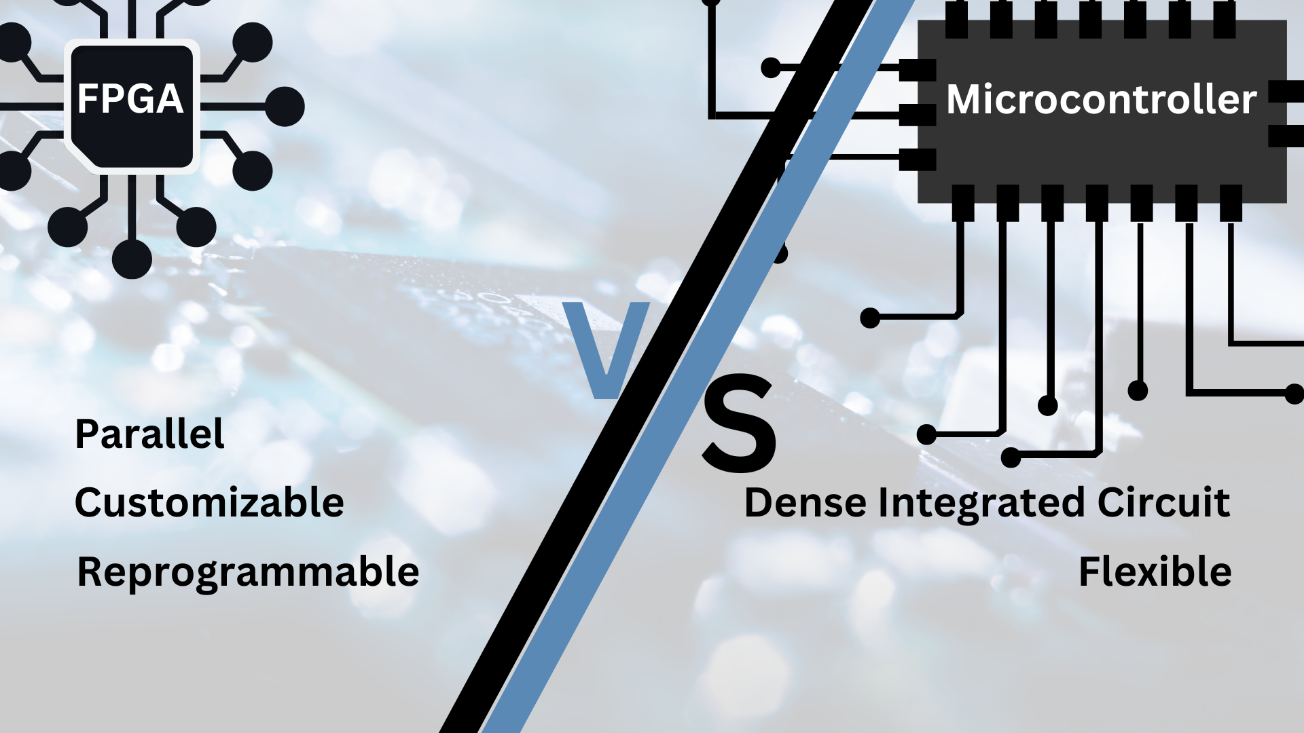
Field-Programmable Gate Arrays (FPGA) belong to integrated circuitry that is reprogrammable and reconfigured to meet the designer's needs. FPGAs are parallel in nature and do not compete for the same resource. Instead, each processing task is independent and is allocated to a devoted integrated chip part. Logical understanding is an independent function and high-performing process.
Features of FPGAs
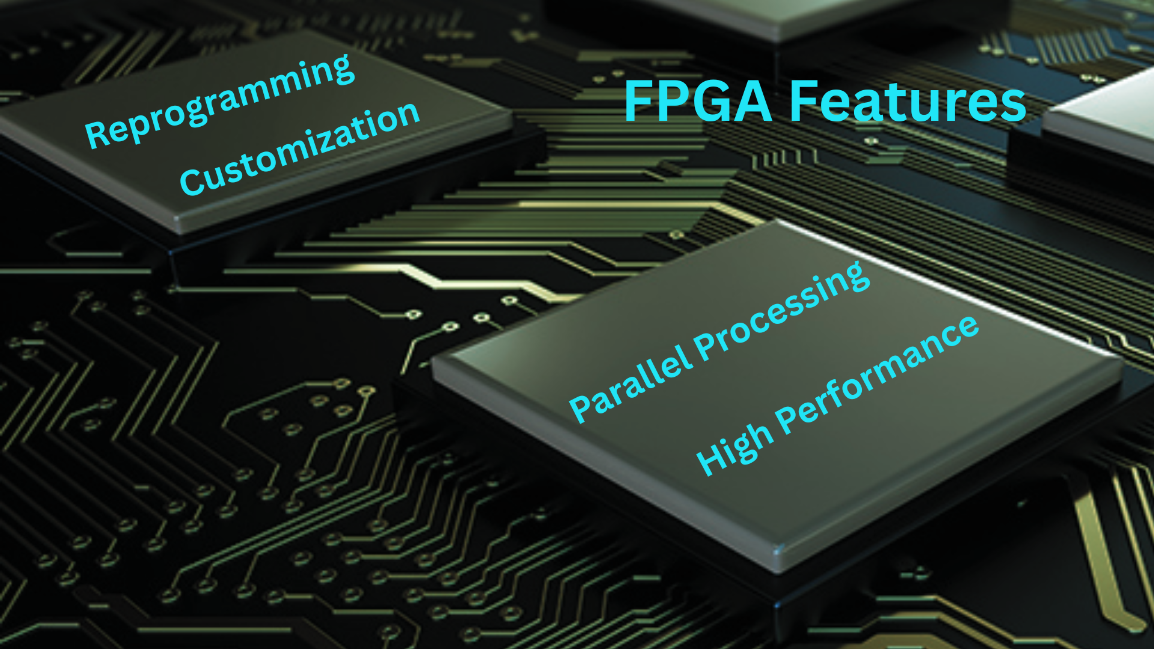
FPGAs are reprogrammable units that perform a variety of tasks simultaneously. Designers can customize FPGAs and still achieve high-performing operations. This embedded system contains various beneficial features engineers use to devise a thorough system.
1. Reprogramming
The most notable feature of FPGAs is their reconfiguring and reprogramming structure, which engineers highly implement to perform several tasks simultaneously. This is helpful when engineers want to redesign the whole system and architecture or customize it for new digital circuitry needs.
2. Parallel Processing
Parallel processing allows FPGA systems to perform various tasks simultaneously, which means they perform several complex computational tasks faster than conventional CPUs, GPUs, or microcontrollers. Such multi-tasking at a rendered speed boosts performance, which is highly liked, especially in environments where computational complexity considerably requires speed, performance, and data processing. For instance, video encoding and decoding can manage multiple video streams.
3. Customization
FPGAs are highly customizable from an engineering viewpoint, and this ability supersedes other circuitry for various application environments. Engineers can personalize FPGAs for specific operational applications to gain performance in assigned tasks, data processing, real-time computing, and signal processing. System engineers can apply specific computation units, commissioned protocols, and distinctive data paths to optimize particular applications.
4. High Performance
FPGAs' performance is defined by the system's parallel ability, where multiple complex and high computational tasks are performed at a desired speed. We can take the example of currency trading applications, which require high financial computation. FPGAs process and perform better with low latency and can produce a competitive edge for trading companies. Apart from these exclusive features, FPGAs carry some distinguishable drawbacks that include:
5. Learning curve difficulty
Considering the features that FPGAs carry, programming is complex, especially because it requires Hardware Descriptive Languages (HDLs). Experts who know software programming find the learning curve to devise HDLs difficult, which may pose entry barriers for new engineers.
6. High Power Needs
Due to their edge in performing parallel processing and computational tasks, FPGAs consume more power. It poses challenges to environments where battery-charged power is supplied, or energy consumption is the key concern. Somehow, high-functioning FPGAs need high power, which may lead to increasing energy costs. It also poses barriers to application environments that require low-budgeted performances.
Understanding Microcontroller
Unlike FPGAs, the microcontroller (MCU) is a dense integrated circuit designed to govern a specific operation in an embedded system. Microcontrollers are microcomputers self-comprised on a single chip. The intention of an MCU is to execute a single systematized task repeatedly. They are generally limited to performing a single repeated task and may not require a full range of functionalities.
Features of Microcontrollers
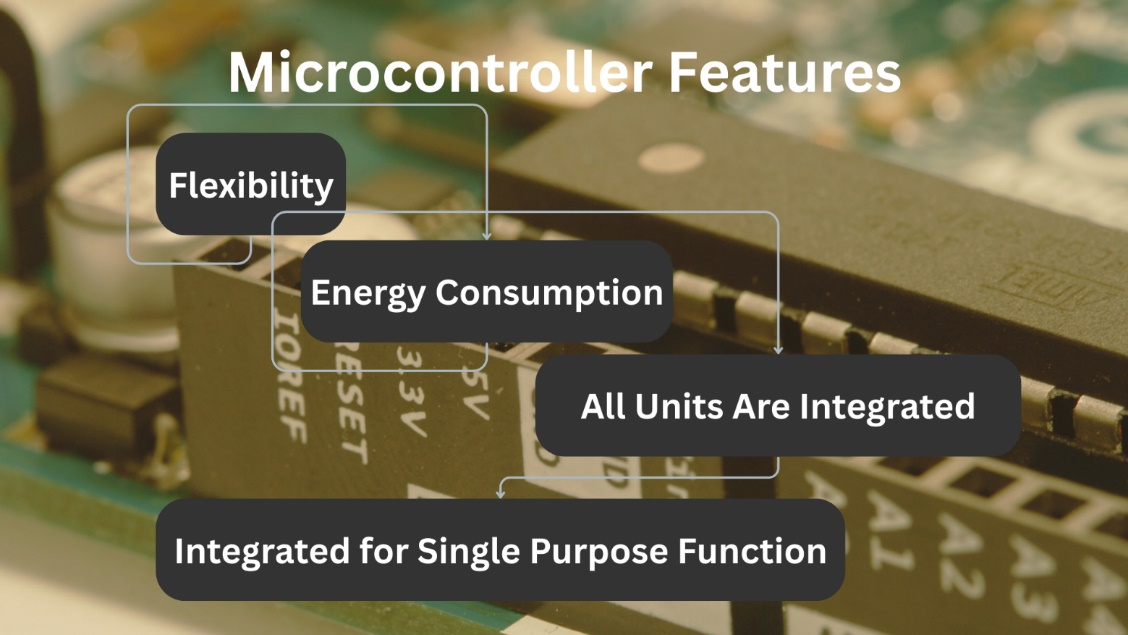
MCUs are entirely different from FPGAs. They are designed to perform a specific function for a particular purpose. The core key features include;
1. Integrated for Single Purpose Function
The MCU structure uses an Input / Output circuitry system, on-chip memory, and other integrated circuitry to operate as a microcomputer. Its function is to perform a specific task repeatedly to gain high performance in that task. Like a computer, it performs different functions on the same circuitry system, including word, image, and video processing. You can access web-based technology, write software programs, and edit by installing various applications.
2. Flexibility
MCUs are highly flexible in-field programming devices. Engineers can program various MCUs in an embedded system after accuracy verification. The storage device enables EPROM or E-PROM for frequent and flexible use.
3. All Units Are Integrated
MCUs are integrated with several components, such as CPU, RAM, Input / Output, Clock, and peripherals, such as UART, SPI, Timers / Counters, and digital-to-analog converters. All system integration aims to perform multiple tasks on a single unit.
4. Energy Consumption
MCUs are designed to perform some functions and contain smaller sizes than FPGAs. Because they contain all integrated units, they consume relatively less energy and are affordable for environments requiring low-budget performances. On a single chip with integrated circuits, they consume less energy and simultaneously cost less.
Apart from these exclusive features, microcontrollers carry some notable drawbacks, including:
5. Slow Processing Power
Microcontrollers have the primary disadvantage of processing slowly with a few cores. MCUs struggle in environments that are highly computational and require real-time processing. Currency trading operations do not install MCUs due to their limited processing ability.
6. Limited Memory
Microcontrollers operate on a limited memory chipset, and instead of parallel processing, their memory source is the same, not specific or dedicated. MCUs commonly use RAM or flash memory to perform various tasks.
7. Limited Storage
MCUs have restricted application size due to limited memory. Typically, memory size restricts storage capacity and data structure complexity and resultantly restricts application size to store. In environments where large data streams or large data logs are required to be maintained, MCUs show limited storage.
8. Limited Development
Applications needed for MCUs are complex and have limited development. They require low-level programming and hardware architecture. Developers manage timers, hardware interruptions, and several low-level operations that are complex for the development process.
FPGAs Vs. MCU Conclusion
We understand that both are highly related to design architecture, programming, and processing abilities.
Adaptation
Engineers can adopt FPGAs for environments requiring more versatile, strong, and high-processing architecture. Though FPGAs are expensive and provide highly customized solutions, they can be adopted for various parallel-performing applications.
On the other hand, engineers can adopt microcontrollers for environments where repeated tasks are required on a single-unit system with less customization and performance abilities. MCUs are highly demanded where needs for hardware customization is less required, such as microcomputers.
Final Words
In summary, both FPGAs and microcontrollers excel in their particular subject areas. FPGAs have high hardware customization, whereas MCUs have a rigid hardware system. FPGAs cost comparatively more than MCUs. A hybrid solution may be a wise approach, where Field-Programmable Gate Arrays (FPGAs) and Microcontrollers (MCUs) provide the best features. A system environment where MCUs handle communication and logic and FPGAs handle high computations, high data-dense tasks, and real-time processing is possible.
To discover the development solutions and empower your business, visit JAK Electronics to procure highly authentic components.
References
Crockett, L. H., Elliot, R. A., Enderwitz, M. A., & Stewart, R. W. (2014). The Zynq Book: Embedded Processing with the ARM Cortex-A9 on the Xilinx Zynq-7000 All Programmable SoC. Strathclyde Academic Media.
Hauck, S., & DeHon, A. (2010). Reconfigurable Computing: The Theory and Practice of FPGA-Based Computation. Morgan Kaufmann.
Kilts, S. (2007). Advanced FPGA Design: Architecture, Implementation, and Optimization. Wiley-IEEE Press.
Maxfield, C. (2004). The Design Warrior's Guide to FPGAs: Devices, Tools and Flows. Newnes.
Noergaard, T. (2012). Embedded Systems Architecture: A Comprehensive Guide for Engineers and Programmers (2nd ed.). Newnes.
Peckol, J. K. (2019). Embedded Systems: A Contemporary Design Tool (2nd ed.). Wiley.
Sass, R., & Schmidt, A. G. (2010). Embedded Systems Design with Platform FPGAs: Principles and Practices. Morgan Kaufmann.
White, E. (2016). Making Embedded Systems: Design Patterns for Great Software. O'Reilly Media.
Wolf, W. (2008). Computers as Components: Principles of Embedded Computing System Design (3rd ed.). Morgan Kaufmann.
Vahid, F., & Givargis, T. (2001). Embedded System Design: A Unified Hardware/Software Introduction. John Wiley & Sons.