Driving down the open road can be a blissful experience until the dashboard lights up like a Christmas tree. Among the ensemble of warning lights, the VSC Off light, often accompanied by the check engine light and VSC Trac Off, can cause a moment of panic for any driver. In this extensive guide, we will embark on a journey to not only decipher the meanings behind these lights but also explore related keywords and topics, providing you with a comprehensive understanding and solutions to the VSC Off conundrum.
Deciphering VSC Off
Picture this scenario: you're behind the wheel, and suddenly, the VSC Off light comes to life on your dashboard. What does it signify, and should you be concerned? VSC Off stands for Vehicle Stability Control Off, a system designed to enhance vehicle stability by reducing skidding during sudden steering maneuvers. However, when this light illuminates, it indicates that the system is temporarily disabled. This might be intentional, such as when driving in low-traction conditions like snow or mud, where a certain degree of wheel slip is necessary.
To debunk myths and misconceptions, it's essential to understand that VSC Off is not an emergency warning but rather a driver-initiated action. Some vehicles come equipped with a VSC Off button, allowing drivers to manually disable the system when needed. However, if the light comes on unexpectedly or remains illuminated during regular driving conditions, it may signal an issue that requires attention.
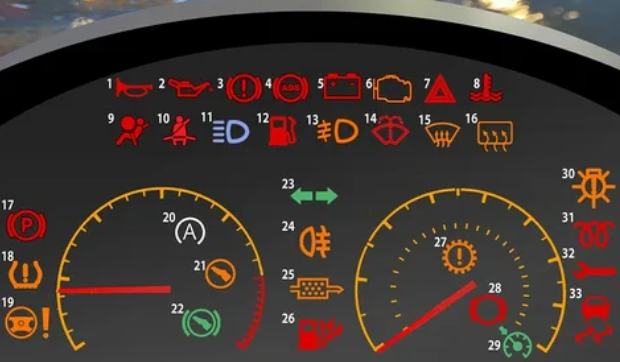
To enhance clarity, let's include an image of the dashboard display, showcasing the VSC Off light in its illuminated state. This visual aid can serve as a quick reference for drivers encountering this scenario.
The Symphony of Lights: Check Engine, VSC Trac Off, and VSC Off
Why do these lights seem to form an automotive trio of trouble? The check engine light, VSC Trac Off, and VSC Off lights often illuminate together, creating an intimidating visual spectacle for drivers. Understanding the relationships between these lights is crucial in determining potential impacts on your vehicle's performance and safety.
The check engine light, also known as the Malfunction Indicator Lamp (MIL) indicates issues with the vehicle's engine or emissions system. When it comes on alongside VSC Trac Off and VSC Off lights, it suggests that the engine performance may be compromised, affecting both power and fuel efficiency. This trio of lights might signal various problems, such as a faulty sensor, a loose gas cap, or more severe issues with the engine or emission control systems.
While VSC Off is a driver-initiated action, the simultaneous illumination of these lights demands attention. It's advisable to have the vehicle inspected promptly to identify and address potential issues. Ignoring these warnings could lead to more significant problems and compromise vehicle safety.
Flashing Signals: VSC Off Light in Action
In certain situations, the VSC Off light doesn't just illuminate; it starts flashing. What could this dynamic signal mean, and how should you respond? When the VSC Off light flashes, it indicates a more urgent situation that requires immediate attention. Unlike the steady illumination, a flashing light suggests an active intervention by the vehicle's stability control system.
This intervention might occur when the system detects a significant loss of traction or stability. It could be due to adverse weather conditions, sudden steering maneuvers, or irregularities in the vehicle's stability control system itself. When the VSC Off light is flashing, it's essential to drive cautiously and avoid aggressive maneuvers. Continuing to drive with a flashing VSC Off light without addressing the underlying issue could compromise your safety on the road.
To address a flashing VSC Off light, drivers should pull over safely, assess the situation, and check for any visible issues such as low tire pressure or wheel damage. If no obvious issues are identified, it's advisable to have the vehicle inspected by a qualified mechanic to diagnose and resolve the problem.
VSC Trac Off – The Unsung Hero
Often overshadowed by its counterparts, the VSC Trac Off light plays a crucial role in maintaining stability and traction control. Vehicle Stability Control (VSC) and Traction Control System (TRAC) work in tandem to enhance the vehicle's stability and prevent wheel slip during acceleration. When the VSC Trac Off light illuminates, it indicates that the traction control system is temporarily disabled.
Understanding the implications of the VSC Trac Off light is essential for drivers. In normal driving conditions, this light should remain off. However, if it comes on during regular driving, it might signal issues with the traction control system. This could include a malfunctioning sensor, issues with the ABS system, or problems with the traction control module.
In scenarios where the VSC Trac Off light accompanies the VSC Off light, drivers should exercise caution. The absence of traction control could lead to reduced stability and increased risk of wheel slip, especially in slippery or challenging road conditions. Prompt inspection and repair are recommended to restore the full functionality of the vehicle's stability and traction control systems.
Conclusion:
As we conclude our extensive journey through the VSC Off conundrum, it's evident that understanding these dashboard lights is pivotal for every driver. Armed with knowledge, you can confidently navigate through any automotive challenge, ensuring a safer and more enjoyable driving experience. So, buckle up, stay informed, and drive with confidence!
In summary, the VSC Off light, when illuminated, is often a deliberate action taken by the driver for specific driving conditions. However, when it appears unexpectedly or in conjunction with other warning lights, it signals potential issues that demand attention. The check engine light, VSC Trac Off, and VSC Off lights often form a trio, indicating various problems affecting engine performance and stability control. A flashing VSC Off light requires immediate caution and inspection.