Quick Links

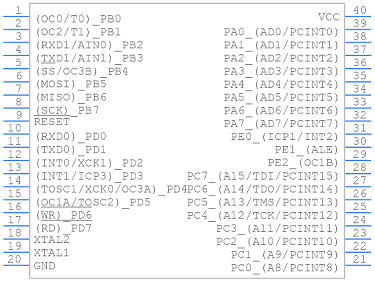
ATMEGA162V Pinout

The following figure is the diagram of ATMEGA162V Pinout.

Pinout

ATMEGA162V CAD Model

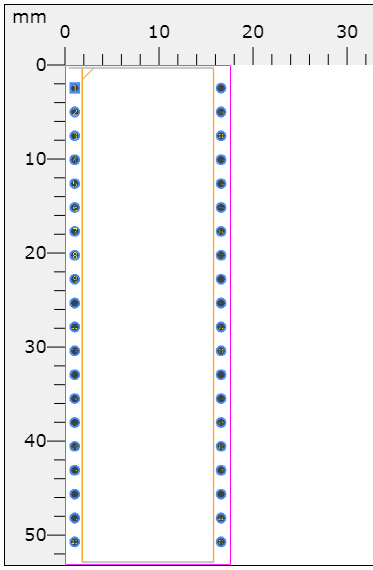
The followings are ATMEGA162V Symbol, Footprint, and 3D Model.

PCB Symbol


PCB Footprint


3D Model

ATMEGA162V Overview

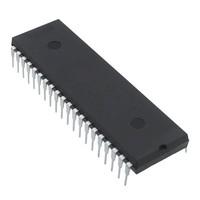
The ATMEGA162V is a low-power CMOS 8-bit microcontroller based on the AVR enhanced RISC architecture. By executing powerful instructions in a single clock cycle, the ATMEGA162V achieves throughputs approaching 1 MIPS per MHz allowing the system designer to optimize power consumption versus processing speed.

This article provides you with a basic overview of the ATMEGA162V Microcontroller, including its pin descriptions, features and specifications, etc., to help you quickly understand what ATMEGA162V is.


ATMEGA162V Features

● High-performance, Low-power AVR® 8-bit Microcontroller

● Advanced RISC Architecture

   ◆ 131 Powerful Instructions – Most Single-clock Cycle Execution

   ◆ 32 x 8 General Purpose Working Registers

   ◆ Fully Static Operation

   ◆ Up to 16 MIPS Throughput at 16 MHz

   ◆ On-chip 2-cycle Multiplier

● High Endurance Non-volatile Memory segments

   ◆ 16K Bytes of In-System Self-programmable Flash program memory

   ◆ 512 Bytes EEPROM

   ◆ 1K Bytes Internal SRAM

   ◆ Write/Erase cycles: 10,000 Flash/100,000 EEPROM

   ◆ Data retention: 20 years at 85°C/100 years at 25°C

   ◆ Optional Boot Code Section with Independent Lock Bits 

   ◆ Up to 64K Bytes Optional External Memory Space

   ◆ Programming Lock for Software Security

● JTAG (IEEE std. 1149.1 Compliant) Interface

   ◆ Boundary-scan Capabilities According to the JTAG Standard

   ◆ Extensive On-chip Debug Support

   ◆ Programming of Flash, EEPROM, Fuses, and Lock Bits through the JTAG Interface

● Peripheral Features

   ◆ Two 8-bit Timer/Counters with Separate Prescalers and Compare Modes

   ◆ Real Time Counter with Separate Oscillator

   ◆ Six PWM Channels

   ◆ Dual Programmable Serial USARTs

   ◆ Master/Slave SPI Serial Interface

   ◆ Programmable Watchdog Timer with Separate On-chip Oscillator

   ◆ On-chip Analog Comparator

● Special Microcontroller Features

   ◆ Power-on Reset and Programmable Brown-out Detection

   ◆ Internal Calibrated RC Oscillator

   ◆ External and Internal Interrupt Sources

   ◆ Five Sleep Modes: Idle, Power-save, Power-down, Standby, and Extended Standby

● I/O and Packages

   ◆ 35 Programmable I/O Lines

   ◆ 40-pin PDIP, 44-lead TQFP, and 44-pad MLF

● Operating Voltages: 1.8 - 5.5V

● Speed Grades: 0 - 8 MHz


Specifications

Microchip Technology ATMEGA162V-8PU technical specifications, attributes, parameters and parts with similar specifications to Microchip Technology ATMEGA162V-8PU.

Attribute Value
Factory Lead Time 4 Weeks
Contact Plating Tin
Mount Through Hole
Mounting Type Through Hole
Package / Case 40-DIP (0.600, 15.24mm)
Number of Pins 40
Number of I/Os 35
Watchdog Timers Yes
Operating Temperature -40°C~85°C TA
Packaging Tube
Series AVR® ATmega
Published 1997
JESD-609 Code e3
Pbfree Code yes
Part Status Active
Moisture Sensitivity Level (MSL) 1 (Unlimited)
Number of Terminations 40
Terminal Position DUAL
Supply Voltage 3V
Frequency 8MHz
Base Part Number ATMEGA162
Supply Voltage-Max (Vsup) 5.5V
Power Supplies 2/5V
Supply Voltage-Min (Vsup) 2.7V
Interface EBI/EMI, SPI, UART, USART
Memory Size 16kB
Oscillator Type Internal
RAM Size 1K x 8
Attribute Value
Voltage - Supply (Vcc/Vdd) 1.8V~5.5V
uPs/uCs/Peripheral ICs Type MICROCONTROLLER, RISC
Number of Bits 8
Core Processor AVR
Peripherals Brown-out Detect/Reset, POR, PWM, WDT
Program Memory Type FLASH
Core Size 8-Bit
Program Memory Size 16KB 8K x 16
Connectivity EBI/EMI, SPI, UART/USART
Bit Size 8
Access Time 8 μs
Has ADC NO
DMA Channels NO
Data Bus Width 8b
DAC Channels NO
Number of Timers/Counters 4
Density 128 kb
EEPROM Size 512 x 8
Number of PWM Channels 6
Number of SPI Channels 1
Height 4.826mm
Length 52.58mm
Width 13.97mm
REACH SVHC No SVHC
Radiation Hardening No
RoHS Status ROHS3 Compliant
Lead Free Lead Free

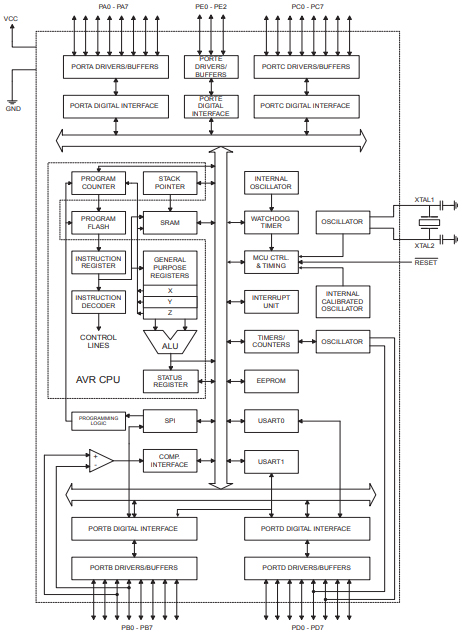
ATMEGA162V Functional Block Diagram

The following is the Block Diagram of ATMEGA162V.

Block Diagram

ATMEGA162V Equivalent

              Model number               Manufacturer                                           Description
ATMEGA162V-8AU Atmel Corporation RISC Microcontroller, 8-Bit, FLASH, AVR RISC CPU, 8MHz, CMOS, PQFP44, 10 X 10 MM, 1 MM HEIGHT, 0.80 MM PITCH, GREEN, PLASTIC, MS-026ACB, TQFP-44
ATMEGA162V-8PI Atmel Corporation RISC Microcontroller, 8-Bit, FLASH, AVR RISC CPU, 8MHz, CMOS, PDIP40, 0.600 INCH, PLASTIC, MS-011AC, DIP-40
ATMEGA162V-8AI Atmel Corporation RISC Microcontroller, 8-Bit, FLASH, AVR RISC CPU, 8MHz, CMOS, PQFP44, 10 X 10 MM, 1 MM HEIGHT, 0.80 MM PITCH, PLASTIC, MS-026ACB, TQFP-44

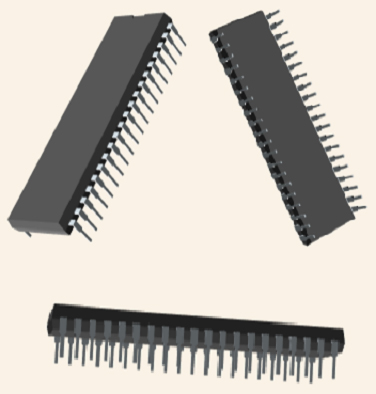
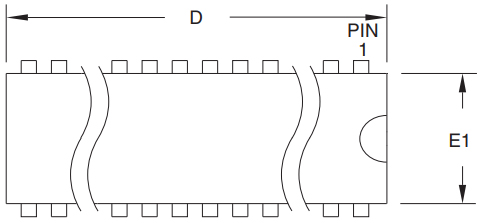
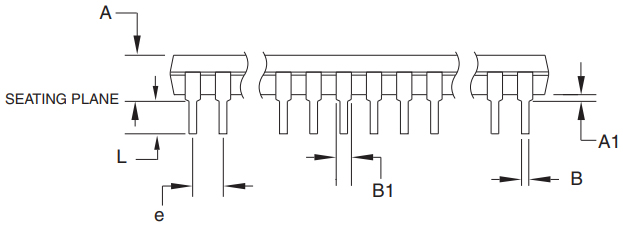
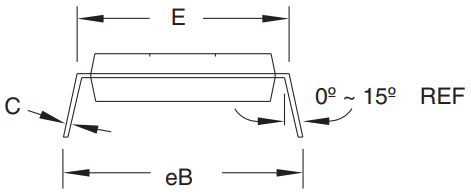
ATMEGA162V Package

The following diagrams show the ATMEGA162V Package.

View A


View B


View C


ATMEGA162V Manufacturer

Microchip Technology Inc. is a leading provider of microcontroller and analog semiconductors, providing low-risk product development, lower total system cost and faster time to market for thousands of diverse customer applications worldwide. Headquartered in Chandler, Arizona, Microchip offers outstanding technical support along with dependable delivery and quality.

Datasheet PDF

Documents

Download datasheets and manufacturer documentation for   

Frequently Asked Questions

FAQ

How many pins of ATMEGA162V-8PU?
40 Pins.
What’s the operating temperature of ATMEGA162V-8PU?
-40°C~85°C TA.
What is the essential property of the ATMEGA162V?
The ATMEGA162V is a low-power CMOS 8-bit microcontroller based on the AVR enhanced RISC architecture.
What are the system development tools supported by ATMEGA162V AVR?
The ATMEGA162V AVR is supported with a full suite of program and system development tools including: C compilers, macro assemblers, program debugger/simulators, In-Circuit Emulators, and evaluation kits.
What is the premise that ATMEGA162V allows system designers to optimize power consumption and processing speed?
By executing powerful instructions in a single clock cycle, the ATMEGA162V achieves throughputs approaching 1 MIPS per MHz allowing the system designer to optimize power consumption versus processing speed.
Tags -
Share this post