

Introduction to LM741 IC and Op-Amp equivalent Circuit
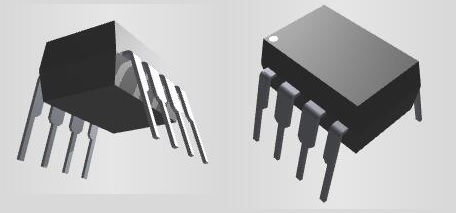
IC OPAMP GP 1 CIRCUIT 8DIP
LM741 is a general-purpose operational amplifier. In this tutorial, we will discuss LM741 op-amp.
Introduction to LM741 IC and Op-Amp equivalent Circuit
IC OPAMP GP 1 CIRCUIT 8DIP
LM741 is a general-purpose operational amplifier. In this tutorial, we will discuss LM741 op-amp.
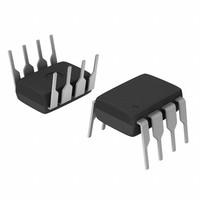
The LM741 series are general-purpose operational amplifiers that feature improved performance over industry standards like the LM709. They are direct, plug-in replacements for the 709C, LM201, MC1439, and 748 in most applications. The amplifiers offer many features which make their application nearly foolproof: overload protection on the input and output, no latch-up when the common-mode range is exceeded, as well as freedom from oscillations.
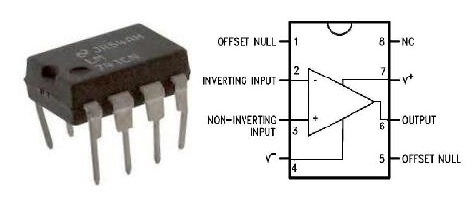
| Pin NO. | Pin Name | Pin Description |
| 1 | Offset Null- | This is the pin where we add voltage if we want to eliminate the offset voltage. This is if we want to completely balance the input voltages. |
| 2 | Inverting Input | This is where the positive part of the input signal that we want to amplify goes if we want our amplified signal inverted. If we don't want it inverted, we place the positive part of the signal into the Non-inverting terminal and place the negative or ground part of our signal here. |
| 3 | Non-inverting Input | This is where the positive part of the input signal that we want to be amplified goes if we want our signal non-inverted. |
| 4 | V- | The LM741 Op-amp is a dual power supply op-amp, meaning it must be supplied with positive DC voltage and negative DC voltage. Pin 4 is where the op-amp gets supplied with negative DC voltage. |
| 5 | Offset Null | This is the pin where we add voltage if we want to eliminate the offset voltage. This is if we want to completely balance the input voltages. |
| 6 | Output | This is the terminal where the output, the amplified signal, comes out. Whatever output the amplifier will drive gets connected to this terminal. |
| 7 | V+ | This is the terminal that receives the positive DC voltage. |
| 8 | NC | This pin stands for Not Connected. It is not used for anything and should be left open. |
Comparators
Multivibrators
DC Amplifiers
Summing Amplifiers
Integrators
Differentiators
Active Filters
ON Semiconductor LM741CN technical specifications, attributes, parameters and parts with similar specifications to ON Semiconductor LM741CN.
| Attribute | Value |
|---|---|
| Mount | Through Hole |
| Mounting Type | Through Hole |
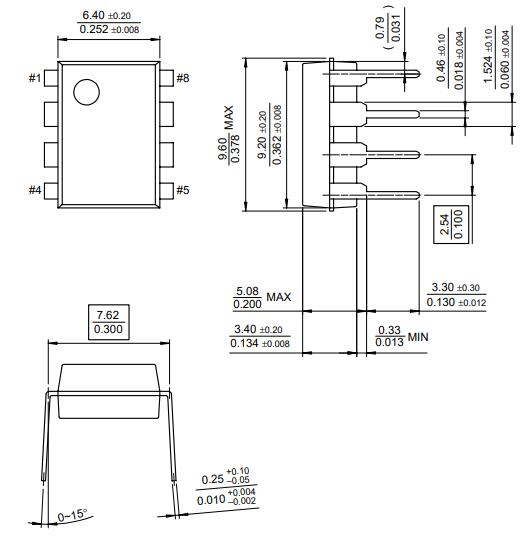
| Package / Case | 8-DIP (0.300, 7.62mm) |
| Number of Pins | 8 |
| Supplier Device Package | 8-DIP |
| Number of Elements | 1 |
| Operating Temperature | 0°C~70°C |
| Packaging | Tube |
| Published | 2001 |
| Part Status | Obsolete |
| Moisture Sensitivity Level (MSL) | 1 (Unlimited) |
| Max Operating Temperature | 70°C |
| Min Operating Temperature | 0°C |
| Base Part Number | LM741 |
| Number of Channels | 1 |
| Number of Circuits | 1 |
| Max Supply Voltage | 18V |
| Operating Supply Current | 1.5mA |
| Nominal Supply Current | 2.8mA |
| Attribute | Value |
|---|---|
| Power Dissipation | 500mW |
| Current - Supply | 1.5mA |
| Slew Rate | 0.5V/μs |
| Amplifier Type | General Purpose |
| Common Mode Rejection Ratio | 70 dB |
| Current - Input Bias | 80nA |
| Voltage - Supply, Single/Dual (±) | 10V~36V ±5V~18V |
| Output Current per Channel | 25mA |
| Input Offset Voltage (Vos) | 6mV |
| Gain Bandwidth Product | 1.5MHz |
| Voltage Gain | 106.02dB |
| Power Supply Rejection Ratio (PSRR) | 77dB |
| Voltage - Input Offset | 2mV |
| Max Dual Supply Voltage | 18V |
| Number of Amplifiers | 1 |
| REACH SVHC | No SVHC |
| RoHS Status | RoHS Compliant |
| Lead Free | Lead Free |
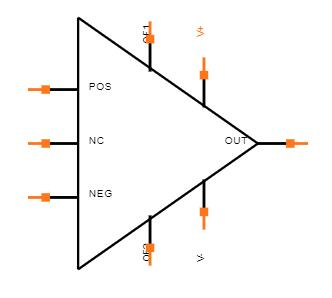
Symbol
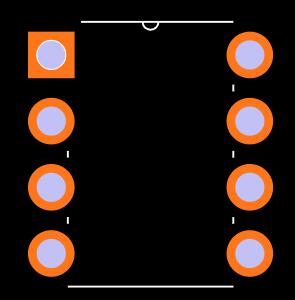
Footprint
3D Models
The electrical specs are discussed in this section. Overload protection is one of the most important characteristics of this op-amp. It also has overload safety for both inverting and noninverting pins. It has the following characteristics that distinguish it from other op-amps:
No latch-up circuit requirement
Freedom from oscillations
Available in PDIP, CDIP, and TO99 packages
The LM741 is a multi-featured operational amplifier IC. The integrated circuit is available in a variety of packaging. The IC's internal circuitry contains a total of 20 transistors. The IC is suitable for a variety of analog tasks. It is suited for use in battery-operated circuits because of its high gain, low current consumption, and wide supply voltage. Furthermore, the IC is overload protected on both ends, i.e. input and output, which protects the IC's internal circuitry from damage caused by overload.
An op-amp can be used in two ways:
1. Inverting Op-amp
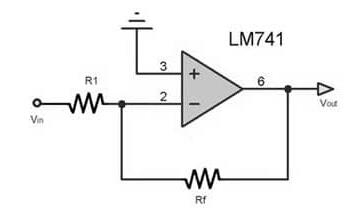
When the input source is connected to inverting terminal PIN 2 and feedback with the output PIN 6 then the op-amp is in inverting condition. Like if PIN 2 is having +ve polarity then we will get –ve polarity of output from PIN 6.
GAIN = Rf/R1
2. Non-inverting Op-amp
When the input source is connected to non-inverting terminal PIN 3 and PIN 2 is feedback with the output PIN 6 then the op-amp is in a non-inverting condition. Like if PIN 3 is having +ve polarity then we will get +ve polarity of output from PIN 6.
GAIN = 1+ (Rf/R1)

When the voltage at the non-inverting input (+) is higher than the voltage at inverting input (-), then the output of the comparator is HIGH. And if the voltage of inverting input (-) is Higher than the non-inverting end (+), then output is LOW. The output of the operational amplifier is the product of the gain and the input voltage.
It is recommended that ICs be kept under their maximum values for long-term good performance. If you want to use the lm741 IC in your projects/devices for a long time, don't use more than 500mW of power. The chip should not be operated at more than 22 volts, and the lowest operating voltage should be 10 volts. Always decouple power supplies using a 0.1uF capacitor and place it as close to the IC in your circuit as possible for best results. Always store and use the IC between -55 and +125 degrees Celsius.
In this part, we will use it as an amplifier.
We will now wire up the LM741 so that it provides amplification by a factor of 10.
This is how the circuit of the LM741 Op Amp will be connected in a circuit to provide an amplification of 10, meaning the output signal will be 10 times larger than the input signal.

Place +15VDC to pin 7 and -15VDC to pin 4. This is necessary so the op-amp can have bias power to allow it to perform amplification. Without this DC power, the op-amp cannot work.
When you connect the signal input to the inverting side of an op-amp, the voltage output is equal to:

The gain of the op-amp is equal to:
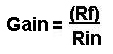
If you want to increase the gain of the op-amp, all you have to do is put a larger resistance for Rf. If you want to decrease the gain of the op-amp, you just put a lower resistance value for Rf.
This is how you connect an LM741 Op-amp for amplification.
onsemi (legally ON Semiconductor Corporation; formerly ON Semiconductor until August 5, 2021) is an American semiconductor supplier company, formerly in the Fortune 500, but dropping into the Fortune 1000 (ranked 512) in 2020. Products include power and signal management, logic, discrete, and custom devices for automotive, communications, computing, consumer, industrial, LED lighting, medical, military/aerospace, and power applications. onsemi runs a network of manufacturing facilities, sales offices, and design centers in North America, Europe, and the Asia Pacific regions. Headquartered in Phoenix, Arizona, onsemi has revenues of $3.907 billion (2016), which puts it among the worldwide top 20 semiconductor sales leaders.
Both the LM741 and LM358 are classic and easily available general-purpose op-amps, but when the features are compared, the LM358 is a clear winner in all categories.
| LM741 | LM358 |
| Dual supply operation | Single supply operation |
| Input common-mode range does not include either supply rail, must be at least 2V above and below | Input common-mode range includes negative supply rail, goes up to 1.5V below positive supply rail |
| Relatively higher bias current | Relatively lower bias current |
| The older part is not recommended for new designs | Easily available and cheap, general-purpose |
| The single amplifier in a package | Dual amplifiers in a single package, quad available |
| Specification | LM741 | LM358 |
| Supply voltage (max.) | ±22V | 32V (±16V) |
| Input bias current (max.) | ~200nA | 100nA |
| Input voltage range (max.) | ±13V (±15V supply) | 0V – (V + - 1.5V) (30V supply) |
Download datasheets and manufacturer documentation for